Ten activation concepts for a global sponsor.
I led a sponsor-activation workstream as Project Manager — directing five creatives, running ten-plus stakeholder meetings, and delivering ten concepts ranging from on-site fan experiences to in-broadcast augmented overlays.
Ten concepts, one sponsor, no obvious answer.
The sponsor had brand goals, a budget envelope, and an audience that lives in fifteen-second clips. We had a creative team and a deadline. The role of PM here wasn't to invent the ideas — it was to make sure ten genuinely different ideas got to the table without the team eating itself in the process.
Lanes, not committees.
I split the five creatives into three lanes — physical activation, broadcast/digital, and player-experience — with a strict no-collision rule on territory. Each lane owned a slice of the brief and brought concepts back to a weekly cross-lane review. The role I played in those reviews was the one of saying out loud which concept was strong, which was weak, and which was the wrong concept for the right reason.
- Three lanes, one briefLanes set in week one based on team strengths, not topic preference.
- Stakeholder calendarTen-plus stakeholder meetings sequenced so feedback arrived at the right phase, not all at the end.
- Concept templateEvery concept presented at the same level of fidelity so they could be compared honestly.
Ten concepts, all defensible.
The deliverable wasn't the winning concept — the deliverable was a portfolio that gave the sponsor real choices, each with a clear rationale, budget, and risk profile. Picking one of ten plausible options is a much better problem to have than picking one of three.
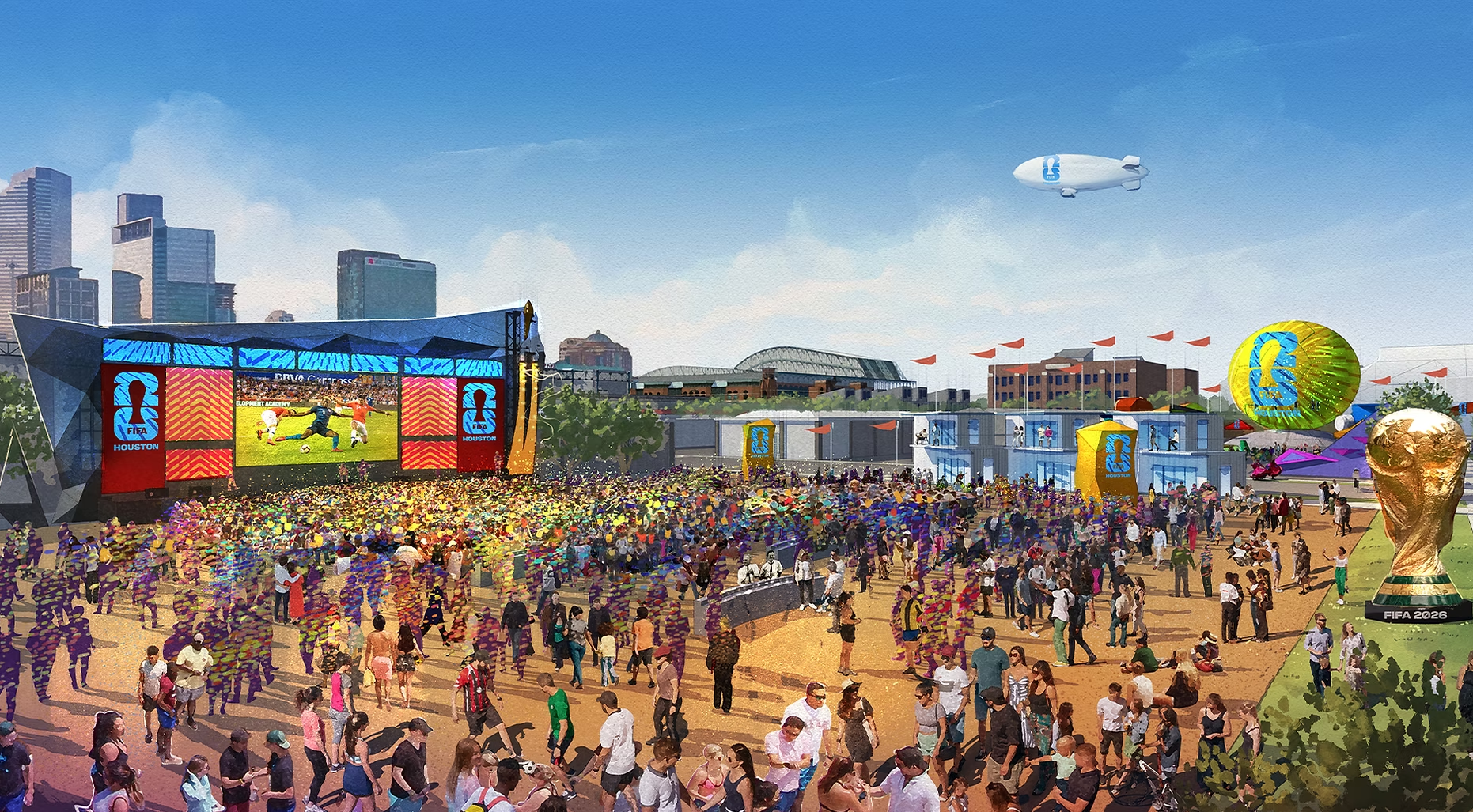 Concept render · sponsor activation
 FIFA 2026 · Houston
Lanes beat brainstorms.
- Defensible variety beats invented consensusFive smart people in a room produce one concept and four bored people. Lanes produce five concepts and a real comparison.
- Stakeholder cadence is designWhen feedback arrives matters as much as what it says.