Sixty thousand headsets, one shared world.
Project Avatar was Accenture's largest internal transformation of the immersive era — the firm distributed 60,000 VR headsets to its global workforce, betting that the future of distributed work was spatial. I was the person responsible for building the worlds and events those 60,000 people would actually step into, designing and producing the AltspaceVR experiences that gave the program a destination.
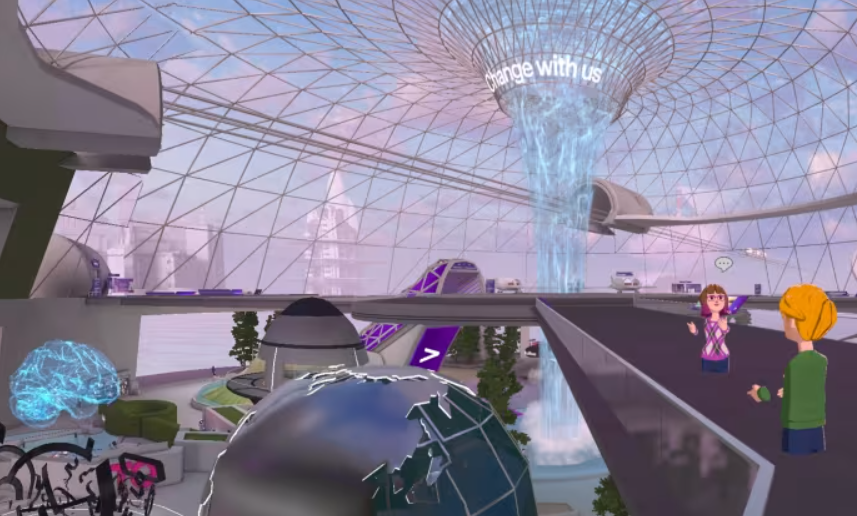
Hardware without a destination is just a paperweight.
In 2021 Accenture made one of the largest enterprise hardware bets in the immersive industry: 60,000 Oculus Quest 2 headsets shipped to employees across the globe. The hardware was the easy part. The hard part was that on day one, those 60,000 people opened the box, put the headset on — and needed somewhere to go that was theirs.
That was my brief. Build the destination. Not a single experience, but a portfolio of worlds and recurring live events that gave the platform a heartbeat — onboarding spaces, town halls, training environments, social rooms — all native to AltspaceVR, all branded, all able to actually hold a room of senior employees long enough to make their first VR memory a good one.
Designing virtual real estate for an enterprise of 700,000.
Each AltspaceVR world had to do three jobs at once: feel like Accenture, feel like a place worth being in, and run on a Quest 2 with thirty other avatars in it. That last constraint shaped most of the design language — silhouette over detail, lighting over texture, social geometry over set dressing.
- Onboarding worldsThe first room a new headset owner walked into. Designed to teach the controller, the social etiquette, and the brand in under five minutes.
- Town hall amphitheatersStadium-scale spaces with stage, crowd, and overflow that could host hundreds of avatars at once without melting the hardware.
- Training roomsSmaller, instrumented spaces where a facilitator could run a real workshop — whiteboards, breakouts, the whole loop.
- Social loungesOff-the-clock hangout rooms. Arguably the most important ones. The platform lives or dies on whether people come back voluntarily.
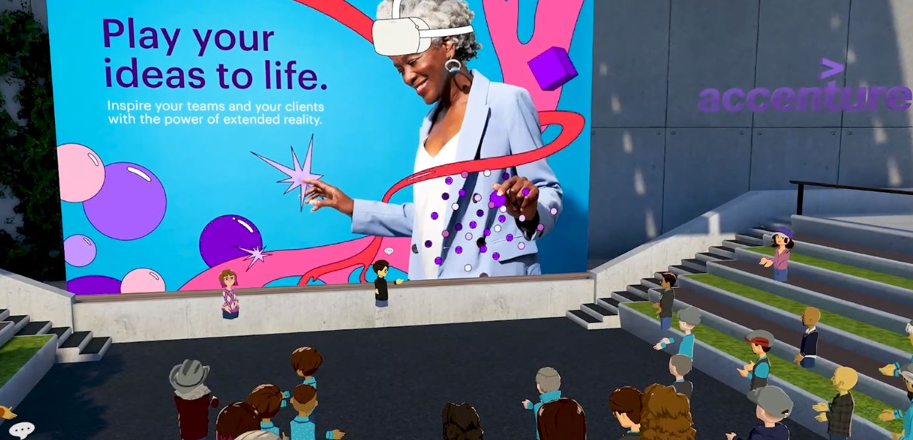 Main stage · AltspaceVR build
 Meta · platform partner
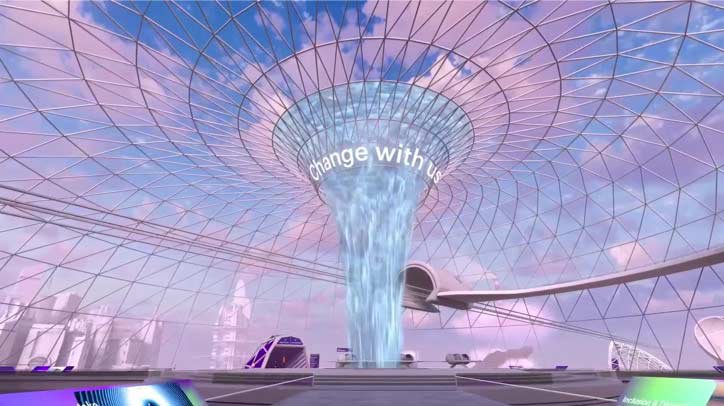 One Accenture Park
Programming a virtual venue, week after week.
Worlds without events are empty stadiums. I produced the live programming that filled them — internal launches, regional all-hands, training cohorts, social gatherings — operating like a venue manager more than a designer. Pre-show rehearsals, run-of-show docs, host enablement, stage marshals, post-show debriefs.
The events taught me more than the worlds did. You learn very fast that audio quality is the experience, that the first ninety seconds determine retention, and that nothing kills a virtual room faster than a host treating it like a Zoom call.
A platform with somewhere to go.
Project Avatar gave Accenture a real, populated metaverse footprint at a scale almost no other company in the world had. When AltspaceVR was sunset by Microsoft in 2023, the playbook we'd built — the world archetypes, the event run-of-show, the host enablement — was the same playbook that ported cleanly into the GCV work at the WEF. The platform changed. The discipline didn't.
What programming a metaverse taught me.
- Silhouette over detailOn mobile-class VR with thirty avatars in the room, what reads is shape and light. Detail is invisible past 3 meters.
- Audio is the experiencePeople will forgive low-poly worlds. They will not forgive bad spatial audio. Budget accordingly.
- Programming is productA great world that runs empty is worse than a basic world that's always alive. The schedule is part of the design.
- The platform is rentedAltspaceVR didn't last. The discipline of running a live virtual venue does. Build the muscle, not the dependency.