Putting a car on Vision Pro — and keeping it there.
I served as Demo Tech Lead for Stratus, an immersive product configurator deployed across five automotive clients on Apple Vision Pro. The mandate was simple to say and brutal to do: own QA, cloud DevOps, compliance, and executive enablement end-to-end, in a brand-new spatial computing platform with no existing playbook.
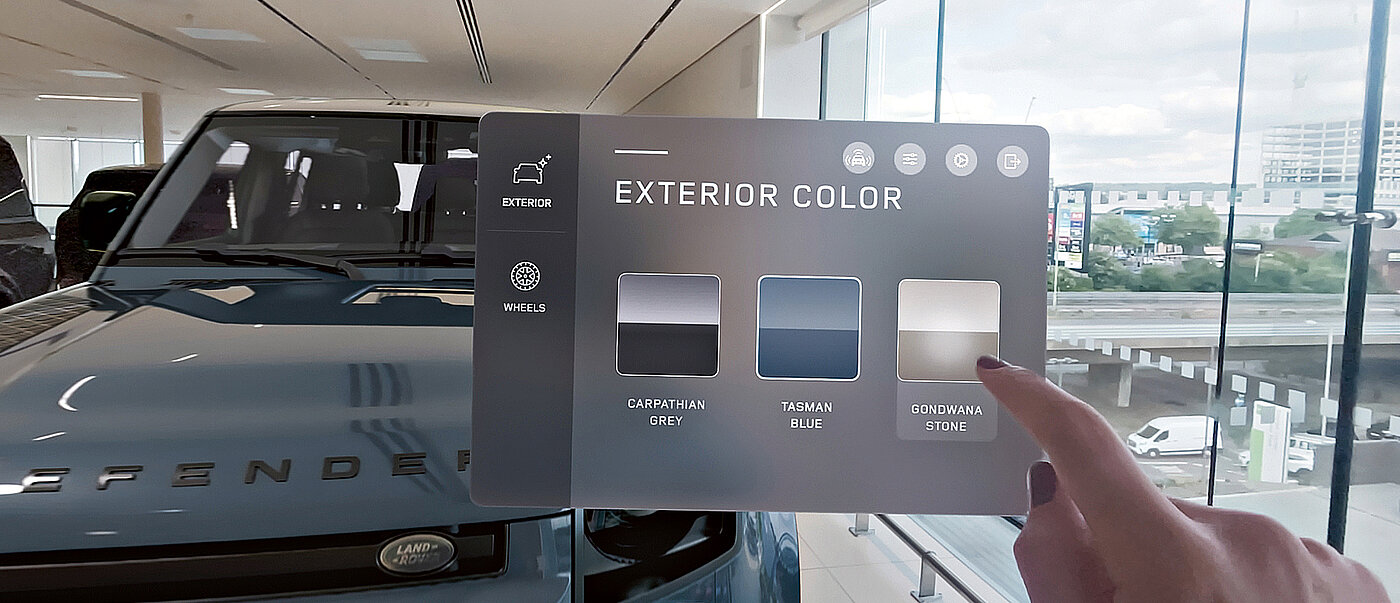
A new platform, a live audience, and no second takes.
Vision Pro shipped in early 2024, and within months we had five Fortune-500 automotive clients asking the same question: can we put our car in this? The answer was technically yes — but the pipeline from CAD to convincing-spatial-experience-running-on-an-eight-pound-headset was uncharted, and our clients expected to walk into a showroom in Los Angeles and have it just work.
The complexity was layered: hardware that hadn't shipped to enterprise yet, multiplayer cloud sessions for collaborative design reviews, compliance reviews with five different IT organizations, and executive demos where any glitch was the demo. The clients weren't buying a prototype — they were buying confidence.
Build the cathedral, and a parking lot for it.
I split the work into four parallel tracks and a single QA spine that all of them had to pass through before anything reached client hands.
Cloud infrastructure
I created and managed eight multiplayer cloud servers distributed globally so every client region had a low-latency option, and so executive showcases didn't have to share infrastructure with development. Each server was scripted, version-pinned, and rebuildable from blank metal in under twenty minutes.
QA spine
I logged and resolved 200+ production bugs over the program's life — reproducible cases, severity-ranked, and attached to the build that introduced and the build that fixed them. The discipline mattered: a bug not seen by QA was a bug seen by an OEM CIO.
Compliance and enablement
Every OEM has its own security organization. I owned the compliance posture across five of them simultaneously, plus the executive enablement side: getting a CMO comfortable putting a $3,500 headset on for the first time, in front of their team, without breaking the trance of the experience.
Demo runbook
For each high-stakes showcase — including a trip to Los Angeles to lead client leadership-team demos in person — I built a runbook covering pre-flight, live, and post-mortem. Pre-flight was a thirty-minute checklist. Live was a single role: be invisible, be ready. Post-mortem was always within 24 hours, always written down.
- Quarantine the demo buildDemo channel was always at least one release behind dev. Stability beat shiny.
- Two of everythingEvery showcase had a hot-spare headset and a backup server pinned to the same build.
- Latency budgetEvery interaction had a target latency. Anything over budget got triaged like a P0.
- One person watchingDuring live demos, one person was off-script and watching the audience's faces, not the headset.
The thing about spatial demos is that you can't pause and apologize. The recovery isn't a refresh — it's the audience deciding whether to trust the technology again. We made sure they never had to.
Five clients in, zero showroom incidents.
The Stratus program ran live for over a year across five OEM clients without a single showcase failure I could trace back to our infrastructure. We trained our clients' demo teams to run their own showrooms, and the LA leadership-team showcases I led in person closed with the kinds of conversations that don't happen if the demo cracks — the conversation about what to build next.
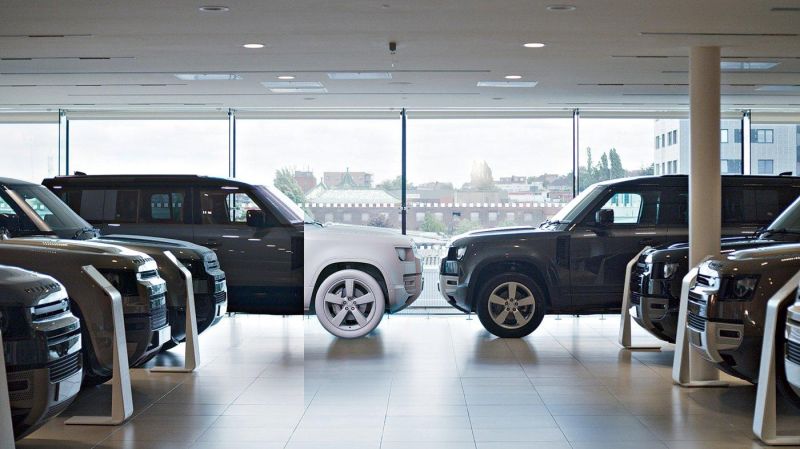 Land Rover · live showroom
Spatial configurator
Land Rover · live showroom
Spatial configurator
What I'd carry forward.
Three things from Stratus shaped how I think about productizing emerging tech.
- Demo and product are different jobsThe demo is a constrained, scripted slice. The product is a system. Conflating them is how you ship neither well. Treat them as separate engineering targets.
- Boring infrastructure wins big roomsThe flashy thing on stage is held up by the boring thing in a data center. The cloud topology is the show.
- Trust is the real productFor platforms that are themselves new — Vision Pro at the time was newer than most of our test patterns — what we sold was confidence. Every architectural choice was downstream of that.